

The Ubiquitous Role of Business Signage in Modern Advertising: From Traditional to Digital Media
Business signage, often perceived as simple physical markers identifying a storefront or location, plays a far more expansive role in advertising. From brick-and-mortar displays to televised commercials, social media campaigns and online platforms, signage serves as a visual anchor that reinforces brand identity, drives consumer engagement, and amplifies marketing messages across channels. This article explores the multifaceted applications of signage in various advertising formats, supported by industry studies, expert analyses, and real-world examples.[1]
1. Signage in Traditional Out-of-Home (OOH) Advertising
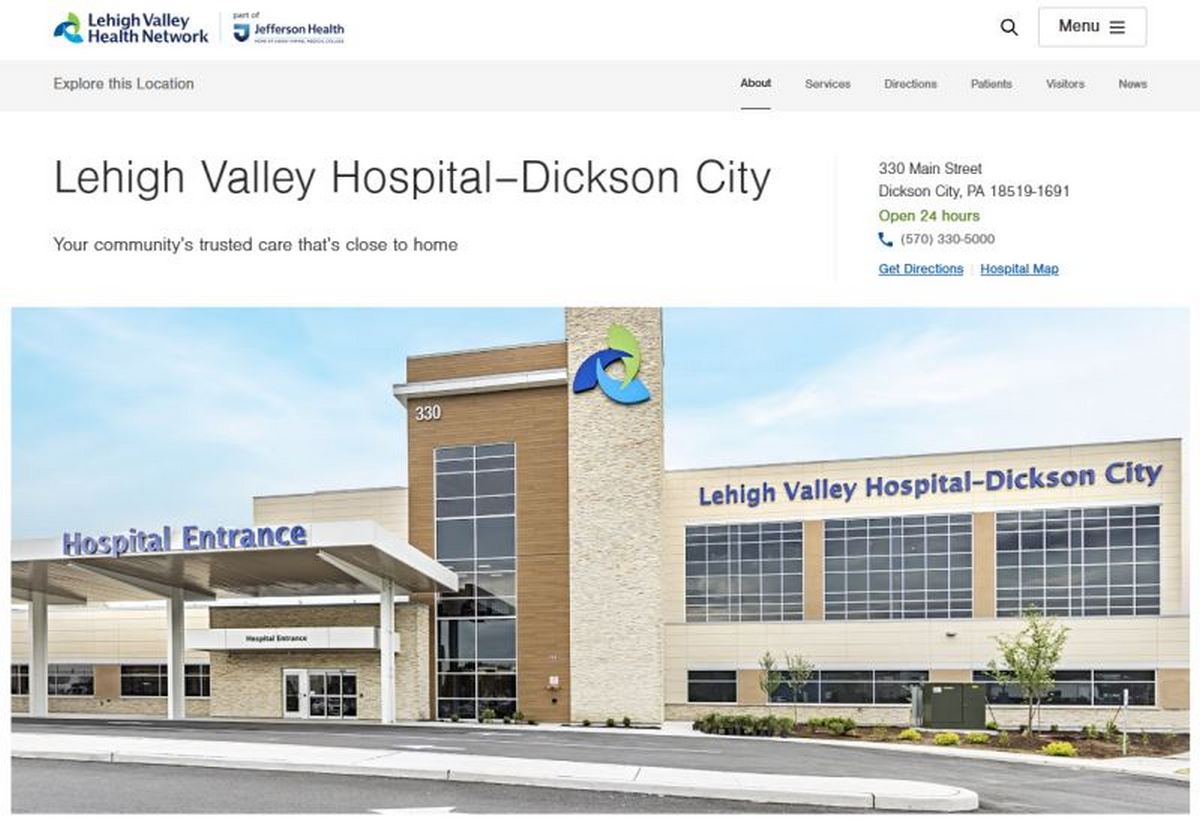
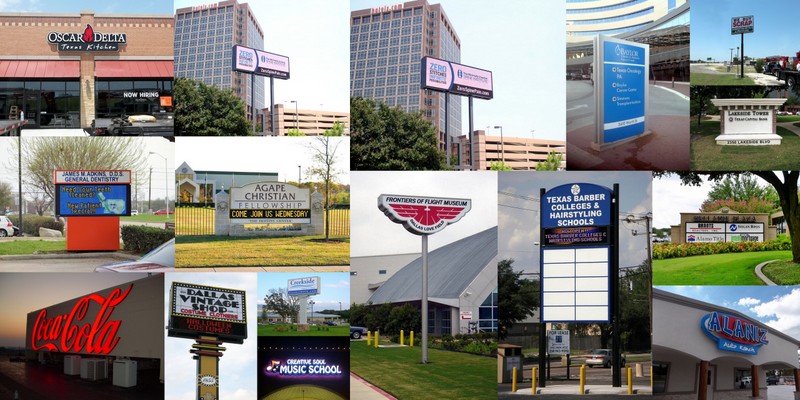
At its core, signage originated as out-of-home advertising. Billboards, storefront signs, vehicle wraps, even directional signage is all important for marketing. Don't discount your signage company's importance to the success of your business! According to the Out of Home Advertising Association of America (OAAA), OOH advertising, including signage, generated over $8 billion in revenue in the U.S. in 2023.[2] Physical signs act as constant brand ambassadors, visible 24/7, and studies show they influence 35% of consumers to visit a store they weren’t originally planning to enter.[3]
Iconic examples include McDonald’s golden arches, which are recognized globally and often replicated in smaller franchise signage.[4] The FedEx logo, with its hidden arrow between the 'E' and 'x', demonstrates how clever signage design embeds subliminal messaging.[5]
2. Signage in Television Advertising
Television commercials frequently integrate physical or digital signage to create authenticity and brand recall. Product placement within shows often features storefront signs, neon displays, or billboards in the background. A study by Nielsen found that branded integrations in TV content increase ad recall by 20% when signage is prominently featured.[6]
Consider Coca-Cola’s holiday campaigns: TV ads show delivery trucks with illuminated signage, retail store displays with glowing bottle icons, and urban billboards—all reinforcing the brand’s festive imagery.[7] In scripted programming, shows like Mad Men meticulously recreate 1960s-era signage to establish period authenticity while subtly promoting modern brands through anachronistic placements.[8]
Even in live broadcasts, such as sports events, LED signage around stadiums appears on-screen, providing exposure to millions. The NBA reports that perimeter LED signage generates over 1.5 billion impressions per season via television alone.[9]
3. Signage in Social Media Marketing
Social media has transformed signage from static to interactive. User-generated content (UGC) often features business signs as backdrops for selfies, check-ins, and reviews. Instagram data reveals that location-tagged photos with visible signage increase foot traffic by up to 18% for local businesses.[10]
Brands encourage this through “Instagrammable” signage—vibrant murals, neon quotes, or 3D installations. Starbucks’ seasonal chalkboard signs and illuminated logo backdrops are frequently shared, with #Starbucks generating over 18 million posts as of 2024.[11] TikTok challenges often involve storefront signs, such as dancing in front of a business’s LED display, turning signage into viral content.[12]
Paid social ads also replicate signage. Facebook and Instagram allow businesses to use images of their physical signs in boosted posts, creating a seamless online-to-offline (O2O) journey. A 2023 Hootsuite report noted that ads featuring real-world signage have 22% higher engagement rates than generic graphics.[13]
4. Signage in Online and Digital Advertising
Online, signage transcends physical boundaries through digital replication. Google Ads and display networks often use high-resolution images of billboards or storefront signs to promote local services. The Google Ads platform reports that location-based display ads incorporating signage imagery improve click-through rates (CTR) by 15%.[14]
E-commerce platforms like Amazon even feature virtual signage in product listings.[15]
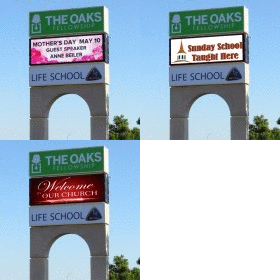
Digital out-of-home (DOOH) blends online targeting with physical signage. Programmatic DOOH platforms (like Sunburst LED Signs™ enable real-time ad swaps on local signage based on weather, traffic, or online behavior.[16]
5. Cross-Channel Synergy: The Omnichannel Role of Signage
Modern marketing thrives on omnichannel consistency, where signage acts as the visual thread. A brand’s storefront sign should match its TV commercial backdrop, social media profile banner, and website favicon. The American Marketing Association (AMA) emphasizes that consistent visual cues, including signage, boost brand trust by 33%.[18]
Case in point: Apple Stores. The glowing Apple logo sign is replicated in TV ads, YouTube unboxings, Instagram Stories, and online banners. This uniformity contributed to Apple’s brand value exceeding $500 billion in 2024, per Interbrand.[19]
6. Emerging Trends and Technologies
Interactive signage with QR codes links physical displays to online experiences. A 2024 Scanova study found that 68% of consumers scan QR codes on signs when prompted.[20]
How You Get The Most From Your Signage
Far from being a relic of pre-digital marketing, business signage remains a cornerstone of advertising across television, social media, and online platforms. Its ability to bridge physical presence with digital reach ensures continued relevance. As technology evolves, signage will only grow more dynamic, interactive, and integral to brand storytelling.
References
- Sign Research Foundation. (2023). The Economic Value of On-Premise Signage. https://www.signresearch.org/research-library/
- OAAA. (2024). OOH Advertising Revenue Report Q4 2023. https://oaaa.org
- FedEx Office Survey. (2022). Signage Influence on Consumer Behavior.
- McDonald’s Corporation. (2023). Brand Guidelines.
- Landa, R. (2018). Graphic Design Solutions. Cengage Learning.
- Nielsen. (2023). Branded Integration Effectiveness Study.
- Coca-Cola Company. (2023). Holidays Are Coming Campaign Analysis.
- AMC Networks. (2015). Mad Men Production Design Notes.
- NBA Digital. (2024). LED Signage Impression Metrics.
- Instagram for Business. (2023). Location Tagging Impact Report.
- Instagram Hashtag Analytics. (2024). #Starbucks.
- TikTok for Business. (2024). Challenge Participation Data.
- Hootsuite. (2023). Social Media Advertising Trends.
- Google Ads Help Center. (2024). Local Display Ad Performance.
- Etsy Marketplace Data. (2024). Search: “custom business sign”.
- Broadsign. (2024). Programmatic DOOH Whitepaper. https://broadsign.com
- Snapchat Lens Studio. (2023). AR Signage Filters.
- American Marketing Association. (2023). Brand Consistency Study.
- Interbrand. (2024). Best Global Brands Report. https://interbrand.com/best-brands/
- Scanova. (2024). QR Code Engagement Survey.
- Clear Channel Outdoor. (2024). AI-Powered DOOH Case Studies.
- U.S. Department of Energy. (2023). LED vs Neon Efficiency Comparison.
Enjoy this article? Share it:
Share on Facebook | Share on X
If you’re evaluating vendors, working with a professional signage company can simplify planning across multiple sign types and locations.
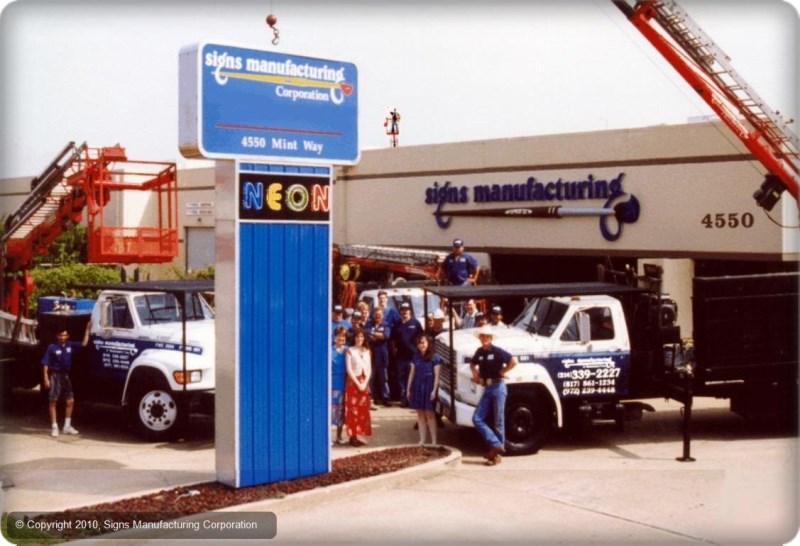
Learn more about Signs Manufacturing, a commercial sign company
Literature
We believe we are the only sign company that offers informative literature on signage, our "Sign Buyer's Guide" series.
Our most popular Guides are:
52 Page Brochure

44 Page Brochure

40 Page Brochure

40 Page Brochure

40 Page Brochure
40 Page Brochure
Also Available
Also Available
 |
|
 |
104 Product Videos |