

The Critical Importance of Unique and Memorable Business and Organizational Signage
In an era where consumers are bombarded with thousands of visual messages daily, the humble sign—whether for a bustling retail storefront, a corporate headquarters, or a nonprofit organization—transcends its basic function of identification. It evolves into a powerful branding tool, a silent ambassador that communicates identity, values, and differentiation. A generic sign risks fading into obscurity, while a unique, standout design becomes a memorable beacon that draws attention, fosters recognition, and drives engagement. This article explores why every organization must invest in signage that does not merely “exist” but commands presence and accurately represents its essence.

The Psychology of First Impressions and Visual Distinction
Research consistently shows that humans form impressions within milliseconds of encountering a visual stimulus. According to a study by Princeton psychologists, judgments about trustworthiness and competence are made in as little as 100 milliseconds based on facial cues alone; the same principle applies to signage. A bland, cookie-cutter sign conveys mediocrity, while a bold, unique one signals innovation and quality. For businesses, this translates directly to foot traffic and sales. The Sign Research Foundation reports that well-designed on-premise signs can increase brand awareness by up to 75% and boost impulse visits by 20-30%.
Consider the iconic golden arches of McDonald’s. This simple yet unmistakable design, introduced in the 1960s, has become synonymous with the brand worldwide. As detailed in Smithsonian Magazine, the arches were inspired by architectural elements but refined into a logo that stands out against urban clutter. Organizations like Starbucks follow suit with their siren emblem, which evolved from a detailed illustration to a streamlined, memorable mark that adorns signs globally, as chronicled on their official history page.
Standing Out in a Saturated Marketplace
In densely populated commercial areas, signage competes for attention amid a sea of competitors. The FedEx Small Business Center emphasizes that effective signs must cut through noise by being legible, illuminated if necessary, and visually distinctive. A study by the United States Sign Council found that changing a sign’s design can increase revenue by 5-15%, underscoring the economic imperative of uniqueness.
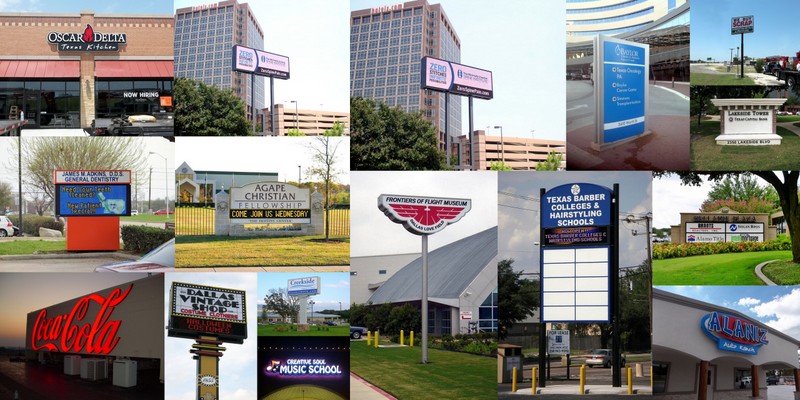
Real-world examples abound. The neon-lit signs of Times Square in New York City demonstrate how extravagance and creativity turn signage into landmarks. Brands like Coca-Cola have leveraged contour bottle-shaped signs since the early 20th century, as explored in their company history. Even non-profits benefit: The American Red Cross uses its simple red cross symbol on signs to evoke immediate trust and urgency, a design principle discussed in AIGA’s design resources.
Representing Organizational Identity Authentically
A sign is not just directional; it is representational. It must encapsulate the organization’s mission, culture, and values. Generic templates from sign shops fail here, producing interchangeable results that dilute brand equity. As noted in the annual Best Global Brands report, iconic signage contributes to brand value, with leaders like Apple using minimalist, illuminated logos that reflect precision and innovation.
For smaller organizations, custom signage levels the playing field. The U.S. Small Business Administration advises investing in signs that tell a story, citing examples where local businesses saw a 10-20% sales uplift post-redesign. Tech giants like Google employ playful, colorful signage at campuses, mirroring their “don’t be evil” ethos, as featured in Fast Company articles on corporate branding.
Practical Strategies for Creating Memorable Beacons
To achieve standout signage:
- Incorporate unique typography and color schemes, as recommended by Hoefler & Co..
- Use materials and lighting innovatively; LED and 3D elements enhance visibility, per International Sign Association guidelines.
- Ensure scalability across digital and physical mediums, aligning with Adobe’s branding tools.
- Test for memorability through A/B studies, a method endorsed by Nielsen Norman Group.
- Use a professional sign company to help utilize your brand for maximum impact.
Case studies reinforce this. Nike’s swoosh on storefronts is instantly recognizable, driving a brand valuation over $30 billion according to Forbes. Similarly, Amazon’s smile arrow sign subtly conveys customer satisfaction, detailed in their corporate overview.
The Risks of Mediocrity and the Rewards of Excellence
Opting for “just a sign” invites anonymity. In contrast, memorable signage builds loyalty and word-of-mouth. The Harvard Business Review has published extensively on visual branding’s ROI, with data showing distinctive marks increase customer retention by 15-25%. Organizations ignoring this do so at their peril, as evidenced by failed rebrands covered in Brandingmag.
Even public institutions recognize this: The United Nations olive branch emblem on signage worldwide symbolizes peace, a design choice explained on their official site. Museums like the Louvre use pyramid-inspired signs to echo architectural grandeur.
Elevate Your Sign to a Beacon
Ultimately, a sign must be more than functional—it should be a unique, memorable beacon that stands out in the crowd and faithfully represents the organization. From global corporations to local nonprofits, the evidence from Entrepreneur, Inc., and countless case studies is clear: invest in distinctive signage to reap lasting benefits in visibility, perception, and performance. Do not settle for ordinary; craft a sign that illuminates your identity and beckons the world to notice.
For further reading, explore resources from the International Sign Association’s research library or Brandchannel for branding insights.
Enjoy this article? Share it:
Share on Facebook | Share on X
If you’re evaluating vendors, working with a professional signage company can simplify planning across multiple sign types and locations.
Learn more about Signs Manufacturing, a commercial sign company
Literature
We believe we are the only sign company that offers informative literature on signage, our "Sign Buyer's Guide" series.
Our most popular Guides are:
52 Page Brochure
44 Page Brochure

40 Page Brochure
40 Page Brochure
40 Page Brochure
40 Page Brochure

Also Available
Also Available
 |
|
 |
104 Product Videos |