

Reed v. Town of Gilbert: Why Content-Based Sign Regulations Are Often Unconstitutional, and What That Means for Commercial Signs and Building “Decorations”
If you operate a business, manage a commercial property, or work with a sign company to install monument signs, channel letter signs, pylon signs, storefront signs, wall signs, or LED message centers, Reed is a core case to understand. It draws a bright constitutional line: when the government regulates speech based on what it says, the rule is usually subject to the highest level of judicial review, and it frequently fails.

1) What Reed v. Town of Gilbert Held (and Why It Changed Sign Codes Nationwide)
The background
The Town of Gilbert, Arizona had a sign code that treated different categories of signs differently based on the message or subject matter. For example, it had distinct rules for “ideological signs,” “political signs,” and “temporary directional signs.” A small church was cited for using temporary directional signs to guide people to services, and the dispute ultimately reached the Supreme Court.
The central rule: content-based regulations trigger strict scrutiny
The Supreme Court ruled that Gilbert’s ordinance was content-based on its face because it defined sign categories and restrictions by reference to the sign’s message. That constitutional label matters because it generally triggers strict scrutiny ... the toughest standard in constitutional law.
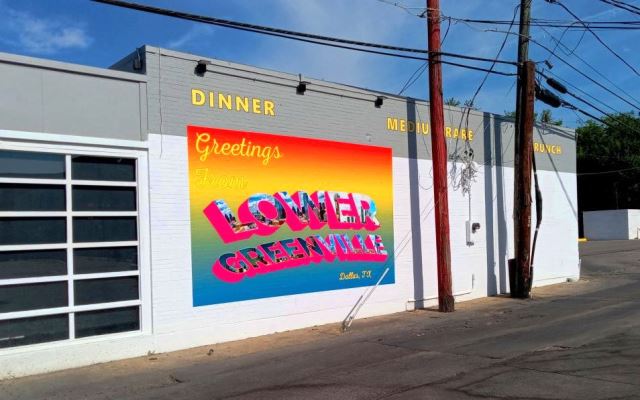
A helpful way to think about it: if a city official must ask “What does it say?” or “What is this about?” to determine which regulation applies, the ordinance is in dangerous constitutional territory. Under strict scrutiny, the city must show the rule is narrowly tailored to a compelling governmental interest. That is very hard to prove, and many content-based sign rules fail.
2) Why Building “Decorations” Can Be Protected Speech (Even When the City Calls Them a “Sign”)
In many real-world disputes, a business describes a building feature as decoration, branding, art, or architectural design. The city labels it a sign and attempts to apply sign regulations, sometimes aggressively. Reed does not automatically exempt “decorations,” but it changes the analysis: the key question becomes whether the city’s rule is content-based or content-neutral.
Visual communication is speech
The First Amendment protects more than spoken words or long essays. It also protects visual communication, words, symbols, images, and designs that convey meaning. That is why courts often treat signs as a protected medium of expression, including for businesses and commercial properties.
Common examples of expressive building features include:
- Branded color bands or architectural accents
- Wall graphics and murals (with or without logos)
- Dimensional logos and emblems
- Window graphics showing services, products, or hours
- Architectural lighting in brand colors
- Themed façade wraps or large-scale decorative patterns
Even when a city calls these features “signage,” the constitutional question remains: is the government regulating the message (content) or regulating objective physical characteristics (size, location, lighting, safety) in a content-neutral way?
3) What Cities Can Regulate After Reed (and What They Usually Cannot)
Reed does not prohibit all sign regulation. Cities may regulate commercial signs to address legitimate interests like traffic safety and aesthetics. The key is how the ordinance is written and enforced.
Generally safer, content-neutral sign regulations
Many sign ordinances are more defensible when they focus on objective features that do not depend on the message, such as:
- Size (square footage or area limits)
- Height (especially for monument signs and pylon signs)
- Placement (setbacks, frontage rules, clearance triangles, zoning districts)
- Materials and construction safety (wind load, electrical codes, listing requirements)
- Illumination (brightness, glare, hours of operation)
- Digital display behavior (for LED message centers: dwell time, transition limits, brightness)
- Number of displays (one monument sign per entrance, limits per tenant bay, etc.)
- Physical sign types (wall sign vs. monument sign vs. projecting sign) when applied without regard to message
Risky, content-based sign regulations
Rules become constitutionally risky when they classify signs by topic or function in a way that requires reading or interpreting the message. Common examples include different rules for:
- “Real estate signs” versus “event signs”
- “Political signs” versus “directional signs”
- “Menu boards” versus “advertising signs”
- “Holiday decorations” versus “branding graphics”

If enforcement depends on what the sign is “about,” Reed teaches courts to treat the ordinance as content-based and presumptively unconstitutional.
4) Related Supreme Court Decisions That Influence Sign Rules and Commercial Display Rights
City of Ladue v. Gilleo (1994): signs can be a uniquely important form of expression
In City of Ladue v. Gilleo, the Court struck down a broad ordinance that heavily restricted residential signs. While that case involved a homeowner, it reinforces a wider principle: signs are often a practical and powerful way to communicate, and near-total bans or unequal exceptions can violate the First Amendment.
Metromedia, Inc. v. City of San Diego (1981): commercial speech, billboards, and unequal treatment
Metromedia is a foundational sign case involving billboard regulation. It recognizes that cities may pursue safety and aesthetic goals, but it also highlights that government must regulate in ways that do not unconstitutionally discriminate among speech, including commercial advertising.
City of Austin v. Reagan National Advertising (2022): clarifying Reed’s reach
In City of Austin, the Court held that an on-/off-premises distinction is not automatically content-based in the way Reed condemned, and it may be reviewed under a less demanding standard in some contexts. This decision is often cited by cities defending certain location-based rules.
However, City of Austin did not erase Reed. Reed still strongly limits rules that single out topics, ideas, or categories of messages for different treatment. The practical takeaway is that sign codes must be carefully drafted to avoid discriminating by subject matter.
5) The “Decoration vs. Sign” Dispute: Common Real-World Scenarios
Scenario A: “Your mural is a sign because it includes a logo”
Cities sometimes argue that once a graphic contains a logo or brand identifier, it becomes “signage.” This is where Reed’s logic becomes relevant. If the rule treats a large wall display differently because of its message or because it identifies a business, the ordinance may be content-based. In contrast, a neutral rule that limits all comparable wall displays by area, placement, or safety factors is more likely to survive.
Scenario B: “Holiday decor is allowed, but business branding isn’t”
If a code allows seasonal displays but bans similarly sized and similarly placed building graphics that promote a business, it may be favoring one category of message over another. Under Reed, that kind of message-based line drawing can trigger strict scrutiny.
Scenario C: Different rules for “directional,” “event,” and “construction” signs
Many older sign ordinances use these categories. After Reed, cities have been encouraged to rewrite such rules because they can require enforcement officials to decide which message category applies. That is exactly the kind of content-based structure the Court criticized.
6) What a Constitutionally Safer Sign Ordinance Often Looks Like
In the years following Reed, many municipalities revised sign codes to reduce legal risk. A safer sign code typically:
- Defines signs using objective physical criteria rather than message categories
- Regulates by size, height, location, and construction safety
- Creates clear, objective permit standards and timelines
- Applies rules evenly to monument signs, channel letter signs, wall signs, and digital signs based on physical impact

For commercial signage projects ... especially monument signs, channel letter signs, pylon signs, and LED message centers. This approach improves predictability. Instead of debates about the meaning of a message, the review process focuses on measurable criteria.
7) The Big Picture for Businesses: The Right to Communicate from Your Own Property
Reed supports a simple constitutional principle that matters to business owners and commercial property managers: the government may regulate the physical impacts of signage, but it generally cannot choose winners and losers based on the message without meeting a very demanding constitutional standard.
That principle becomes especially important when a city tries to stifle a business’s building design and branding by calling it a “sign” and then enforcing message-based restrictions or exceptions. When enforcement turns on whether a display is “art,” “decorative,” “directional,” “political,” or “advertising,” the ordinance can drift into the content-based territory Reed condemned.
8) Practical Takeaways for Commercial Signs (Monument Signs, Channel Letters, and More)
- If a city ordinance treats signs differently based on the sign’s topic, category, or message, it may be content-based and vulnerable under Reed.
- Content-neutral rules that focus on size, placement, height, illumination, and safety are more likely to be lawful.
- Building “decorations” that communicate meaning (logos, images, graphics, patterns, and branded design) can be protected speech, even if the city tries to classify them as “signage.”
- A knowledgeable sign company can help design compliant monument signs, channel letter signs, wall signs, storefront signs, and LED message centers that meet objective code requirements while supporting strong on-premise branding.
Disclaimer
This article is for general informational purposes only and is not legal advice. Sign ordinance disputes can be fact-specific, and laws vary by jurisdiction. For a legal opinion about a specific city’s sign code or an enforcement action, consult a qualified attorney experienced in First Amendment and land-use matters.
Enjoy this article? Share it:
Share on Facebook | Share on X
If you’re evaluating vendors, working with a professional signage company can simplify planning across multiple sign types and locations.
Learn more about Signs Manufacturing, a commercial sign company
Literature
We believe we are the only sign company that offers informative literature on signage, our "Sign Buyer's Guide" series.
Our most popular Guides are:
52 Page Brochure

44 Page Brochure
40 Page Brochure
40 Page Brochure
40 Page Brochure
40 Page Brochure

Also Available
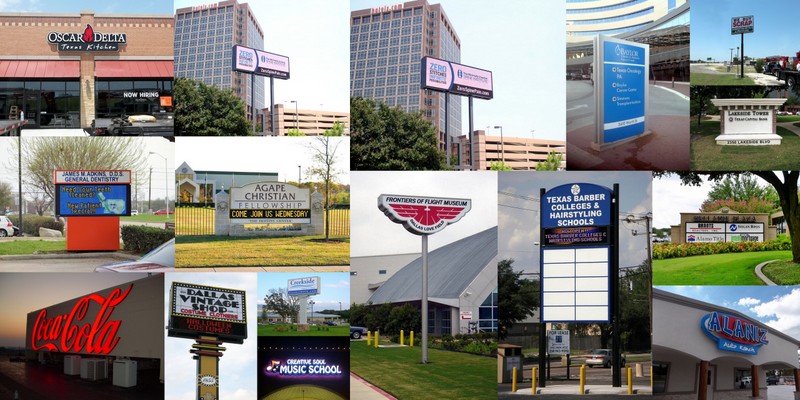
Also Available
 |
|
 |
104 Product Videos |